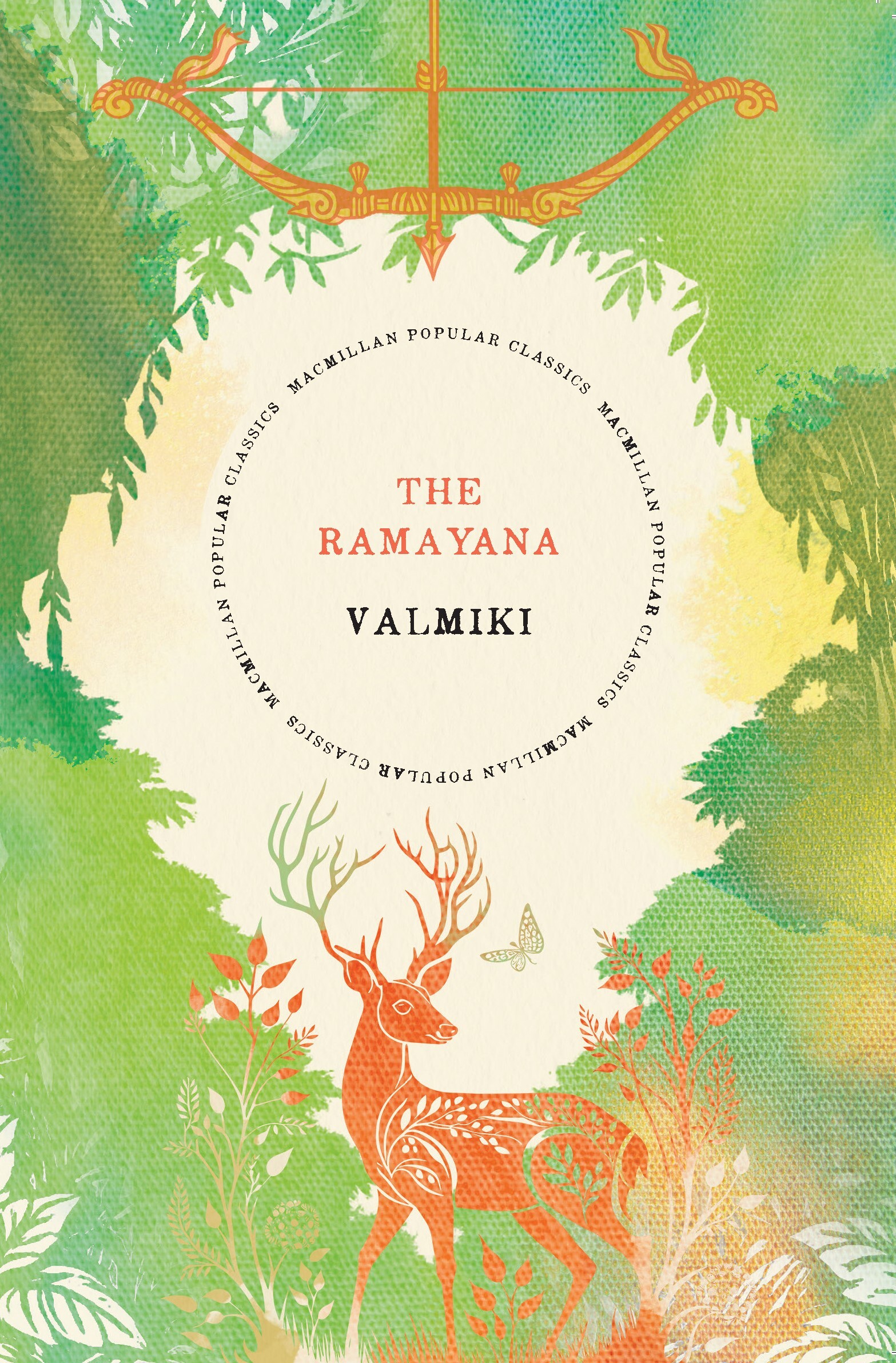
The Ramayana
Valmiki
Translated by Romesh C. Dutt
Synopsis
Attributed to the sage Valmiki and composed between 300 BCE and 300 CE, the Sanskrit Ramayana is one of India’s foundational epics and a cornerstone of Hindu culture. At its core lies the exploration of dharma – a complex, contextual framework of ethics, duty and moral choices that guides human behavior through life's inescapable dilemmas.
The narrative follows Rama, the prince of Ayodhya and ideal son, who is exiled to the forest for fourteen years alongside his devoted wife, Sita and loyal brother, Lakshmana. When the demon king Ravana abducts Sita, Rama forms an alliance with the monkey king Sugriva and the formidable divine devotee Hanuman to wage war and recover her. Beyond the heroic rescue, the tale confronts the painful schism between personal devotion and public duty when King Rama must navigate the demands of governance against his private love.
Functioning simultaneously as heroic fable, artistic performance, and sacred scripture, the Ramayana provides a cultural vocabulary for morality, familial devotion and self-understanding. Over two millennia, it has birthed a vibrant, living tradition of diverse retellings – spanning devotional art to critical perspectives by women, indigenous groups and social reform movements.
This landmark edition features Romesh C. Dutt’s historic 1899 English verse translation. Produced during a pivotal era of Indian cultural self-determination, Dutt’s faithful, poetic rendering preserves both the dramatic grandeur and emotional nuance of Valmiki’s original text for global readers.