Read an excerpt from RED SWORD by Bora Chung!
Amid a literal fog of war on a disputed planet, a woman is thrust into battle, forced to fight in her captors' war. Red Sword combines stunning world-building with a thought-provoking challenge to readers: what does it mean to wield power over others?

Read an excerpt here:
Even after they were gone, it took a moment for the silence to be broken.
“What happened?” said one of the women. The older man asked what had become of the young man.
“Are you hurt?” another woman inquired.
She did not cry. But she couldn’t answer either. She opened her mouth to speak but ended up shuddering instead.
The other women supported her. They sheathed her sword in her scabbard, avoided her wounds as they placed her hands on their shoulders and surrounded her, and walked her back to where the spaceship was.
The Imperials clucked their tongues at the fact that they hadn’t brought back any of the white aliens’ weapons. But the women didn’t bother telling them of everything that had happened to them, and the Imperials only said of their apparent lack of thinking, “Typical women,” and let them go as they shook their heads.
Even after her wounds were treated, the woman kept shivering. The women suggested she eat, but all she could manage to take in was a little water. She couldn’t bear even the thought of food. She couldn’t forget the young man’s left eye as it stared back at her through the fog. The dark hazel had already turned black and there was no life in it, and the slightly open, pale lips were as beautiful as they had been when he was alive. The young man had grown up in suffering and had spent six years, a lifetime for a youth, getting to this faraway planet in search of his freedom, but he had accomplished none of what he’d set out to do and died a senseless death. Why did he have to be born, and why did he have to die?
Amid these thoughts, she realized that she had nothing that had belonged to the boy. Which was why she left the spaceship once more in search of his body.
The planet’s sky was a constant whitish gray, making it difficult to tell night from day. As they traversed the black of space, the crew of the vessel she had come in with had observed strict rules where leaving one’s bunk, let alone quarters, during sleeping hours was forbidden. But perhaps because they had arrived at their destination and the battle had already begun, no one stopped her from leaving the ship.
Her arms, right shoulder, and right leg, all places where the white rays had touched, were burning and aching. The smell of metal in the white fog was even more stinging than before. She had no idea where the body of the young man was. Soon, she was lost.
—It’s all right.
It was the young man’s voice.
—I’m here.
She walked toward it. A hand was stretched out, which she grabbed. Rough and warm, just as she remembered it.
“Aren’t you hurt?” she asked. The young man grinned.
—It hurts very much.
She started to cry. The tears she hadn’t shed when the young man had fallen, when she had killed the white woman, or when the unnis came running to her aid—they poured from her all at once. She gripped the warm and rough hand of the young man and kept crying and crying.
—It’s all right.
The young man kept saying.
—It’s all right.
His words made her cry even more. The young man waited patiently until she stopped crying. Once she did, he started to speak again.
—Take my gun.
She tried to control her voice. “I don’t know how to use—”
—Take it anyway.
He smiled.
—Who else will ever remember me in this world?
This made her start crying again.
—You’ll survive.
He patted the back of her hand.
—You’ll survive until the end and find what you’ve always searched for.
“But how ...” She was whispering through her sobs. “How will I, alone, without you ...”
—You can do it. Because you’re strong.
Smiling, he carefully wiped the tears running down her cheeks.
—And you’re with strong people.
“But I’m not strong,” she cried, “I’m not strong without you ...”
And she told him all the stories she had told him before about her wounds and traces on her skin. How she had been born and raised to use and guard the sword, the battle when the Imperials had conquered her village, the violent memories of everyone she had loved being killed or dragged away somewhere, and the other violence endured at the hands of the Imperials, the life of a prisoner of war, the life of a slave. Every time she experienced these violent things, a little bit of her mind and soul would crumble, and she did not feel she was getting stronger. She simply felt more exhausted. The only time in her whole life when she had felt truly strong was the time she had spent with the young man. It was her happiest time.
Red Sword
by Bora Chung
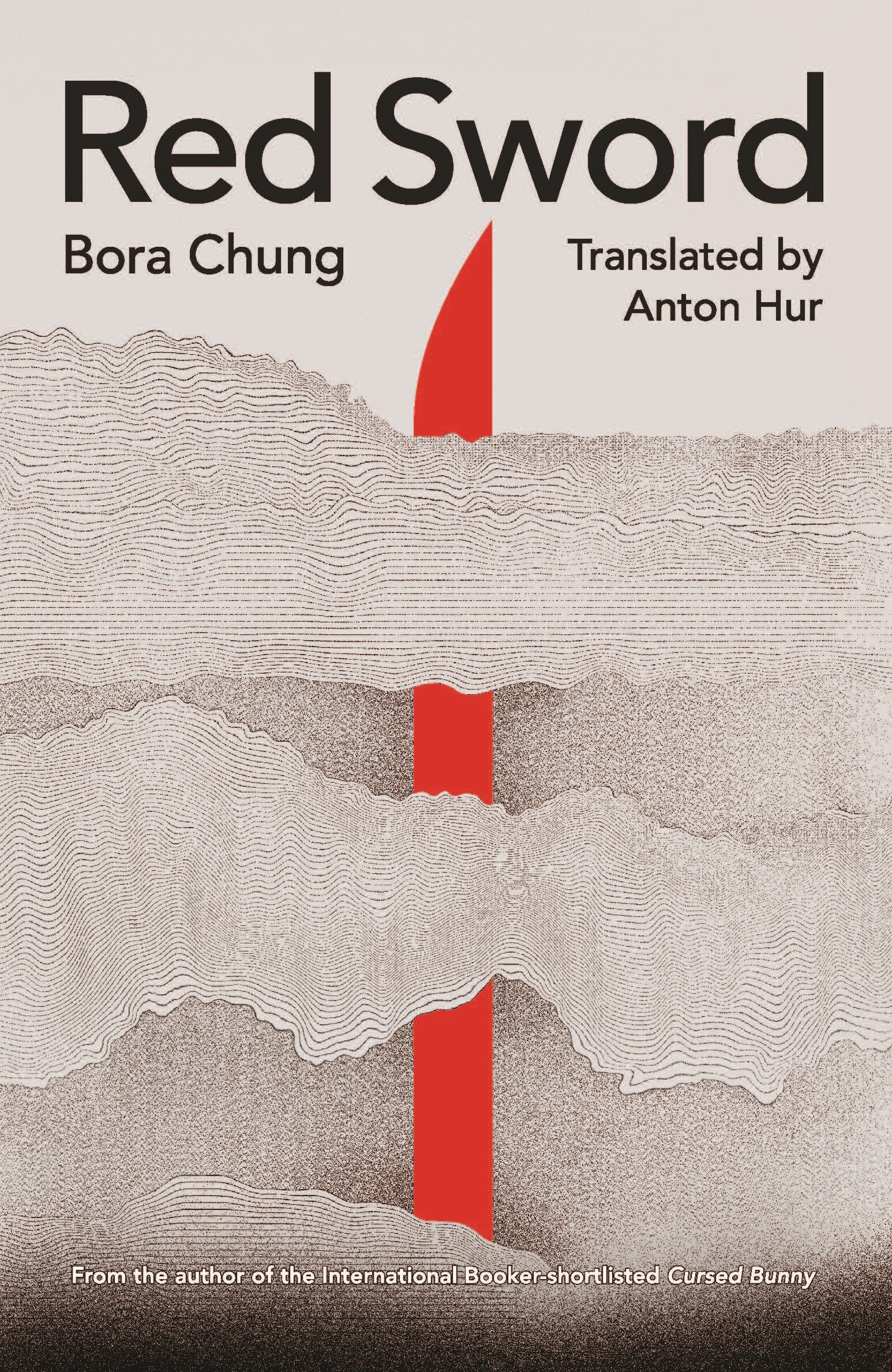
Amid a literal fog of war on a disputed planet, a woman is thrust into battle, forced to fight in her captors' war. With an empire at her back, ready to kill her at the slightest hesitation, this slave turned reluctant hero must battle through an unknown enemy, scientific abominations, and truly alien terrain to uncover the truth about her identity and that of her enslaved companions.
Chung's novel—told in sparse, evocative prose and expertly translated by Anton Hur—draws on the real history of Korean soldiers who fought and died in a war against Russia on behalf of the Qing Dynasty. Red Sword combines stunning world-building with a thought-provoking challenge to readers: what does it mean to wield power over others?

