How to make: Wyvern’s Chicken Curry (The Platonic Ideal of an Anglo-Indian Chicken Curry)
Here's a delicious and historical recipe of a delectable chicken curry!

Learn how you can make the Platonic Ideal of an Anglo-Indian Chicken Curry!

Wyvern’s Chicken Curry
Total time
1 hour
Prep time
45 minutes
Amount
3 - 4 people
Ingredients
- Small chicken (cut into pieces with trimmings/bones reserved)
- flour
- onion
- carrot
- peppercorns
- celery
- salt
- sugar
- coconut or almond milk
- shallots
- garlic
- butter or clarified beef suet
- curry powder
- curry paste
- bay leaf
- chutney
- sweet acid (e.g.
- lemon juice)
- green ginger
- ground almonds
- dried coconut
- tomatoes
- green chillies
- anchovy or plain vinegar
- water or extra stock
Cut a small chicken into pieces and dredge with a little flour. Make a cup of stock with the trimmings and bones, a sliced onion, carrot, pepper corns, celery, salt and sugar and another cup of coconut or almond milk. In a stew pan, sauté six shallots or two small white onions cut into rings and a clove of finely minced garlic in two ounces of good quality tinned butter until yellow brown. Add a heaping tablespoon of the stock curry powder and one of the paste, or, if the latter is not available, two tablespoons of the powder. Cook for a minute or two, adding slowly a wineglassful of the coconut milk and then the broth. Simmer for a quarter of an hour to create a rich, thick, curry sauce. Keep the sauce warm while you prepare the chicken. In a frying pan, fry a minced shallot in an ounce of butter or clarified beef suet for a couple of minutes, then lightly fry the chicken pieces. As soon as they are lightly coloured, place them in the gravy in the stew pan, marinating for at least half an hour. Then slowly simmer the mixture over a low fire, adding stock or water if needed to cover the chicken. During this period, the bay leaf, chutney, and sweet acid should be added. If the paste was not added previously, pounded almond and coconut are now added with a little spice and grated green ginger. The curry should be tasted and more acid or sweet added if needed. As soon as the pieces are tender, a coffee cupful of coconut milk should be added and stirred for three minutes. If a dry curry is needed, the curry is simmered longer without the lid, but continually stirred so that the meat doesn’t stick on the bottom. Remove the seeds and juice from two or three tomatoes, chop them with a quarter of their bulk of white onion, and season the mixture with salt, two finely chopped green chillies, a bit of chopped celery, a pinch of black pepper, and a teaspoon of vinegar (preferably anchovy vinegar if available).
Curry
by Colleen Taylor Sen
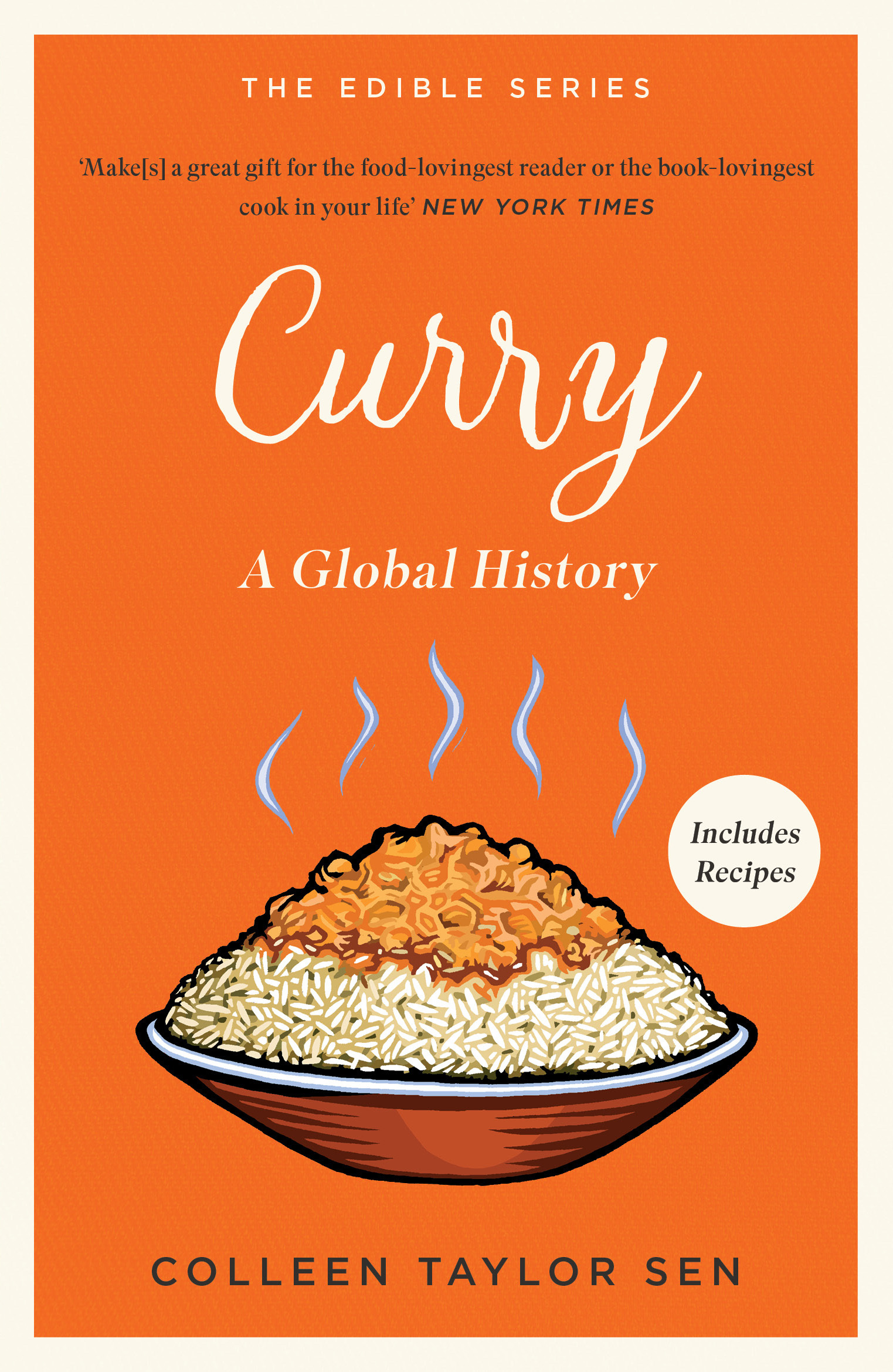
The flavourful history of a much-disputed, much-loved food
Curry is one of the most widely used – and misused – terms in the culinary lexicon. Outside of India, the word is often employed as a catch-all to describe any Indian dish or food, yet Indians rarely use it to describe their own cuisine. This book answers the fundamental question ‘What is curry?’ by offering a lively account of its many incarnations.
In this global history, food writer Colleen Taylor Sen examines the Anglo-Indian origins of curry and how it has been adapted throughout the world. Exploring the curry universe beyond India and Great Britain, she chronicles the elegant, complex curries of Thailand; the exuberant curries of the Caribbean; Japan’s favourite comfort food kari raisu; Indonesian gulais and rendangnonya cuisine; and exotic Western hybrids, such as American curried chicken salad, German currywurst and Punjabi-Mexican-Hindu pizza.
Along the way, Sen unravels common myths and illuminates the world of curry with titbits from popular songs, literary works and historical and modern recipes.

