Read an excerpt from BATANAGAR by Paramita Sen!
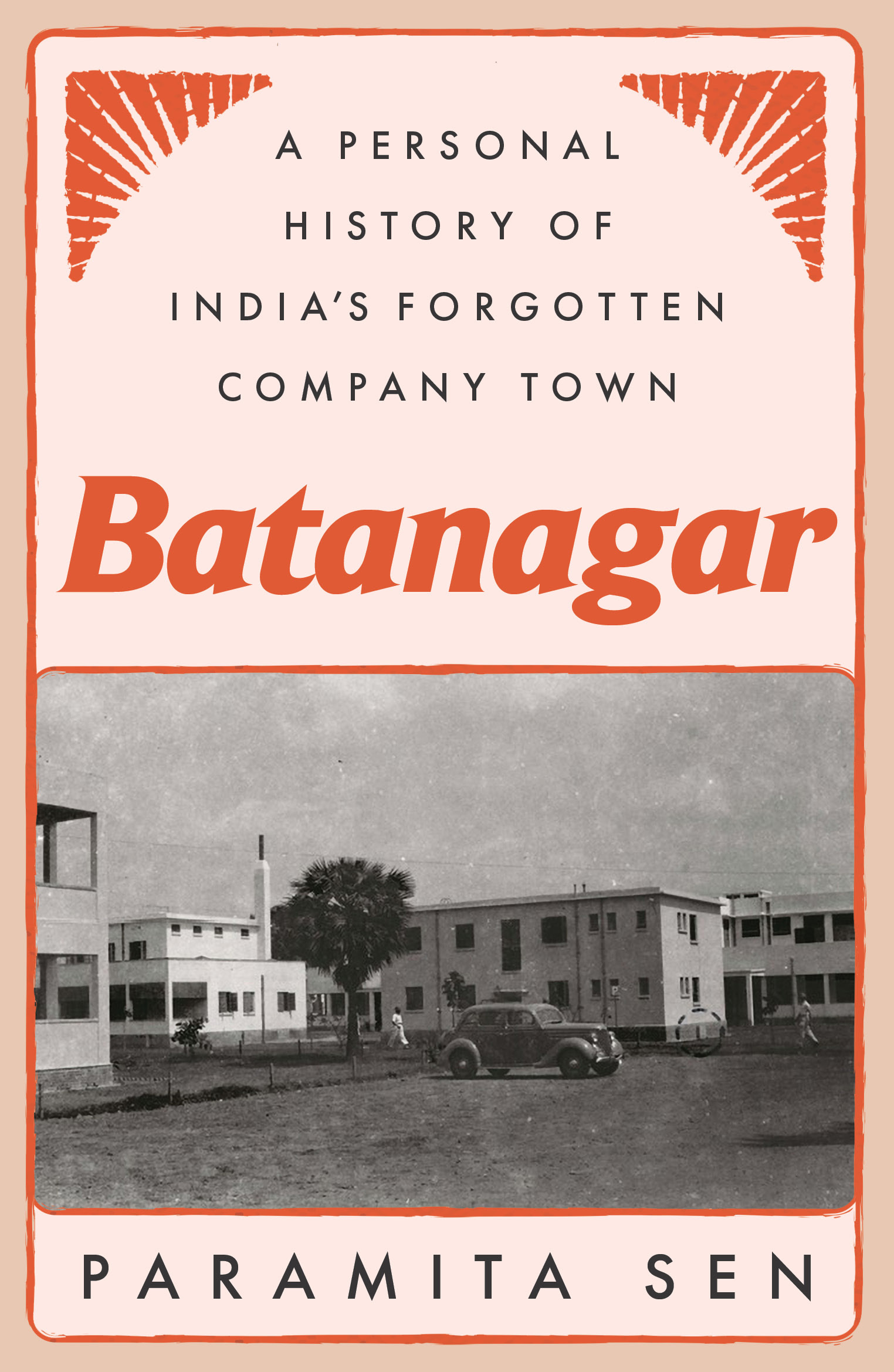
Batanagar is a personal history of India's forgotten company town.
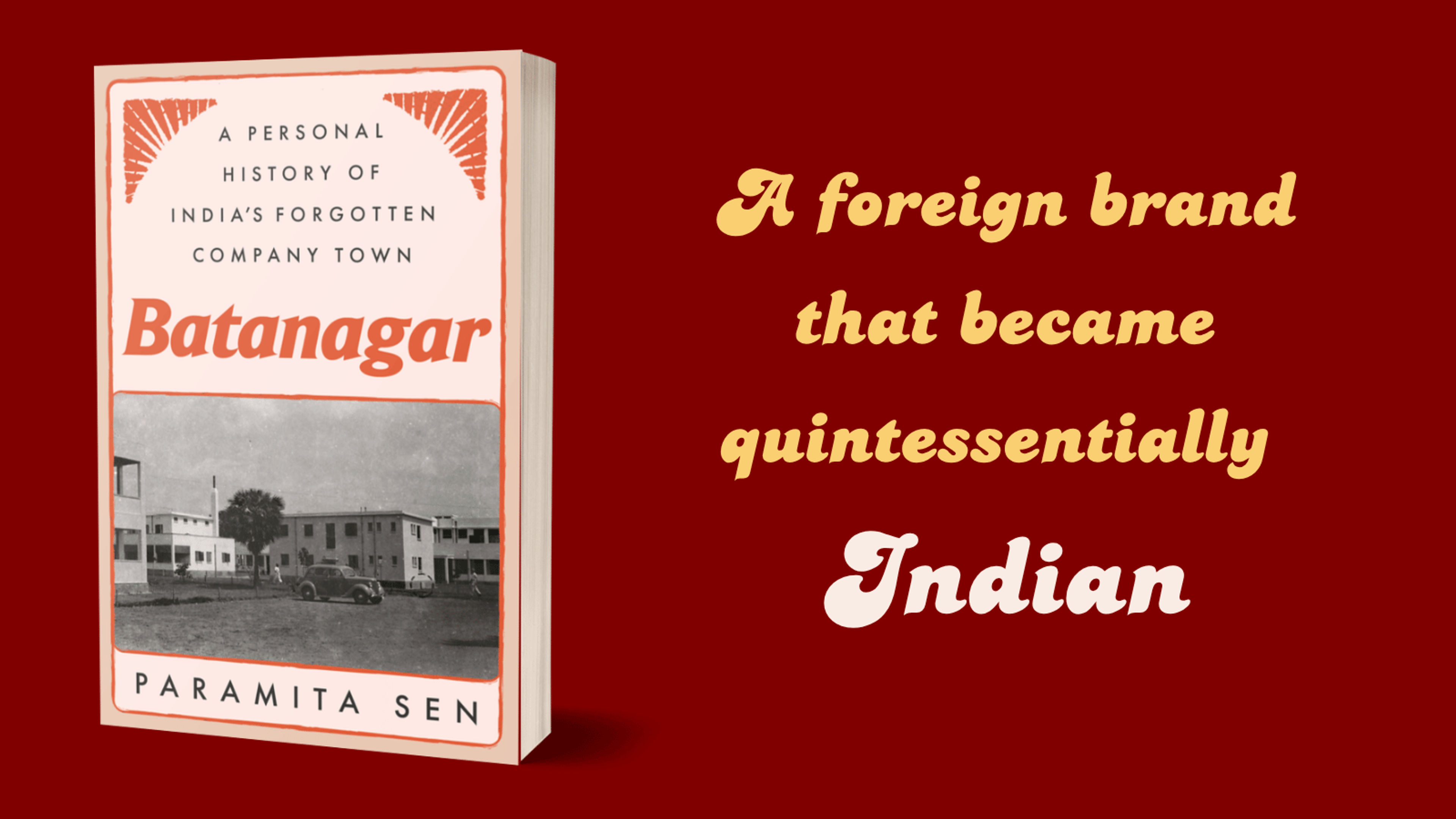
Read an excerpt here:
The first time I encountered Indian poet and travel writer, Vikram Seth, was through verse. It was the summer of 1986, and his first novel written in verse, The Golden Gate, had been published to great acclaim. I was in eleventh grade at Bishop Cottons Girls School in Bangalore, sitting under a canopy of the old tree in the quad, leafing through excerpts of his book printed in The Illustrated Weekly. With me were Malini and Naina, from my Optional English class, and one copy of the broadsheet magazine stretched between us. We huddled together, straining our necks, reading aloud in unison so as not to miss a single word. Collectively awestruck at the novelty of form and fluidity of verse, we pressed on to idolize him. That he was young, handsome and studied at both Oxford and Stanford, only added to the breathless quality of our adoration.
Clearly, we weren’t the only ones swept up in Seth euphoria; most of India’s English-reading population was abuzz with news of his brilliant new novel. Seth’s earlier works, non-fiction and poetry, though engaging, had not captivated readers the way his debut novel did. Pritish Nandy, then editor of The Illustrated Weekly, had cleverly tapped into this craze, publishing large excerpts from the book, thus whetting the appetite of restless readers, and ensuring copies of his magazine flew off the shelves.
Not having the benefit of internet searches, I had to rely on the grapevine to satisfy my immediate urge to know everything about him. The Weekly bio was succinct but revealed no personal details, and no one at school seemed to know more than what was available in the public domain. Further enquiries yielded no new results, and I was almost at my wits’ end trying to figure out what to do next. As if reading my mind, a couple of days later, my father asked what was new at school. I gushed about this dazzling new Indian poet and travel writer, who, inspired by the English translation of Pushkin’s Eugene Onegin, had written an entire novel in verse, composed of sonnets in iambic tetrameter. This added information, while adding to the wow factor, was not exactly what I was after, but my father seemed duly impressed. He went on to say that it was a remarkable feat indeed, and that we Bata people had a special reason to be proud of his success. It was my turn to be utterly astounded!
What followed was an hour of amazing revelations. Vikram’s father, Prem Seth, was a Bata man whom Baba had interacted with a few times over the years. They never had the opportunity to work together since the Seths left for Patna before my father arrived in Batanagar. Baba spoke highly of Vikram’s mother, Justice Leila Seth, saying she was a trailblazer and that he followed her career with great interest. The unexpected discovery of these associations had a curious yet profound impact on me. Aside from elation and feeling emotionally and intellectually connected with Seth, I recognized, for the first time, stirrings within me of a desire to write. It wasn’t well formed, this idea, just a whisper that felt too embarrassed to speak out and declare its intention publicly, but nonetheless a kernel of thought that took hold in the deep recesses of my mind.
Soon after, Babua da, a family friend who spent time with the Seths in Batanagar, gifted me a copy of The Golden Gate for my birthday. In it he inscribed, ‘May this saturate your craze.’ If anything, reading the book had the opposite effect on me. I lost myself in its pages, getting acquainted with characters whose lives looked nothing like mine, imagining their hopes, dreams and aspirations, falling in love with San Francisco long before I set foot in the city. Reading aloud, I marvelled at the novel’s technical wizardry, letting the stanzas trip off my tongue in a symphony, all the while admiring the writer’s engrossing storytelling and incisive wit. I wondered wistfully if Seth would ever write about Batanagar, centring a future novel in its idyllic setting.
In a few years, I set out on my maiden voyage to the United States, a new bride ready to start her new life in a brand-new country. I was allowed two suitcases, one was neatly piled with saris from my trousseau that I would never wear, and the second with winter clothes from India that were supposed to keep me warm in frigid Providence. Tucked between the silken folds was The Golden Gate, a handbook and lodestar, that travelled with me grounding and keeping me company on many a snowy evening. That first winter filled me with a longing so deep, for longer days and brighter skies, that I never considered living in New England, even though I started feeling at home there. Spring arrived finally, in a burst of green, bringing a bounty of unexpected gifts. Alongside the emergence of early blooms and return of birds and insects, came the exciting news that Seth had written a second novel, A Suitable Boy, which was to be published in late spring.
Our friends, Lisa and Vijay, returning from a trip to India, gave us the Indian edition of A Suitable Boy as
a wedding gift. Calling it a modern masterpiece, critics extolled the assured confidence and literary sweep of the book, which they said was reminiscent of classic novels from the nineteenth century. Set in India, newly independent and facing monumental challenges, the novel follows a widowed mother’s efforts to find a suitable match for her youngest daughter, and the trials and tribulations of four intertwined extended families. Also included among its 1,349 pages was my wish come true, an immortalization of my beloved hometown, Batanagar. It felt like Seth had perceptively intuited my hope and realized it for me.
Autobiographical in parts, Seth places his parents’ marriage at the centre of the novel. The purported suitable boy is Haresh, whose character is inspired by his father. Haresh works at a Czech footwear company, Praha Shoe Company, and lives in the township of Prahapore on the outskirts of Calcutta. The fictional Prahapore, which could easily have been an exact replica of Batanagar, is described in the novel as:
‘The endless rows of workers’ houses; the offices and cinema; the green palm trees lining the road and the intensely green playing fields; the great, walled factory – the wall itself painted in neat segments advertising the latest lines of Praha footwear; the officers’ colony (almost exclusively Czech) hidden behind even higher walls.’
Beyond this, readers also recognized several Prahamen as being based on actual people from Bata leadership.
Batanagar
by Paramita Sen
A foreign brand that became quintessentially Indian
In the tiny Czech town of Zlín, Tomáš Baťa grew his family’s modest shoe shop into a veritable empire, founded on local craft, modern technology and a globalized perspective. In the 1930s, he turned his attention to India – a land of great industrial potential and abundant skilled labour. This move was welcomed by leaders of business and the freedom struggle as a step towards building a self-sufficient, independent nation. Thus, the foundation stone of one of India’s earliest company towns, Batanagar, was laid in 1934 near Kolkata, inscribed with the words ‘a monument to international understanding and collaboration’. Over the following decades, the town grew into a bastion of innovative thinking, cosmopolitanism and community.
Former resident Paramita Sen paints a vivid picture of her childhood in this idyllic town in the 1970s and '80s, while also examining the larger context of the march of Indian history. She traces the impact of key moments on Batanagar – such as the Bengal Famine of 1943, the end of colonial rule in 1947, the rise of the Naxalbari movement in the 1960s and more. The town and its ethos captured the imagination of luminaries like Nehru and Tagore and was at the centre of some of Bata’s landmark innovations, such as the iconic hawai chappal, which endeared the brand to its Indian consumers, who comprise its largest market to this day.
Like other Bata company towns around the world – Batadorp (Netherlands), Batapur (Pakistan) and Batatuba (Brazil) – Batanagar’s unique legacy has been all but lost to posterity in the throes of disrepair and redevelopment over the decades. Batanagar shines a light on this pioneering Czech company and its iconic Indian company town.